China Top 10 Compact Shelving Manufacturers?

Time:2026-10-15 Author:Isabella
0%

Choosing among China’s top 10 Compact Shelving manufacturers requires more than comparing attractive catalogs. A reliable supplier should demonstrate practical experience, consistent engineering, and transparent production standards. This guide examines companies that design and manufacture space-saving storage systems for archives, warehouses, libraries, offices, and industrial facilities.

Real performance appears in small details. A smooth handwheel should move loaded carriages without excessive effort. Rails must remain aligned after repeated opening and closing. Steel panels should resist bending, while powder-coated surfaces need to withstand daily handling. Safety features also matter, including anti-tip mechanisms, locking systems, end barriers, and clear load ratings. Factory audits, sample inspections, installation records, and responsive after-sales service can reveal more than promotional claims.

“Top” is not absolute.

The ranking considers manufacturing capacity, product customization, material quality, export experience, documentation, and customer support. Certifications may help, but they should be verified for scope and validity. Buyers should request drawings, testing data, warranty terms, and references from comparable projects. A manufacturer serving a large archive may not suit a small warehouse with limited floor loading. That difference is easy to overlook.

This article offers a practical starting point for procurement teams and distributors. It also acknowledges an imperfect reality: supplier information can change, and online claims may require independent confirmation. By comparing strengths, limitations, and typical applications, readers can identify a Compact Shelving partner that fits their space, budget, safety expectations, and long-term operating needs.
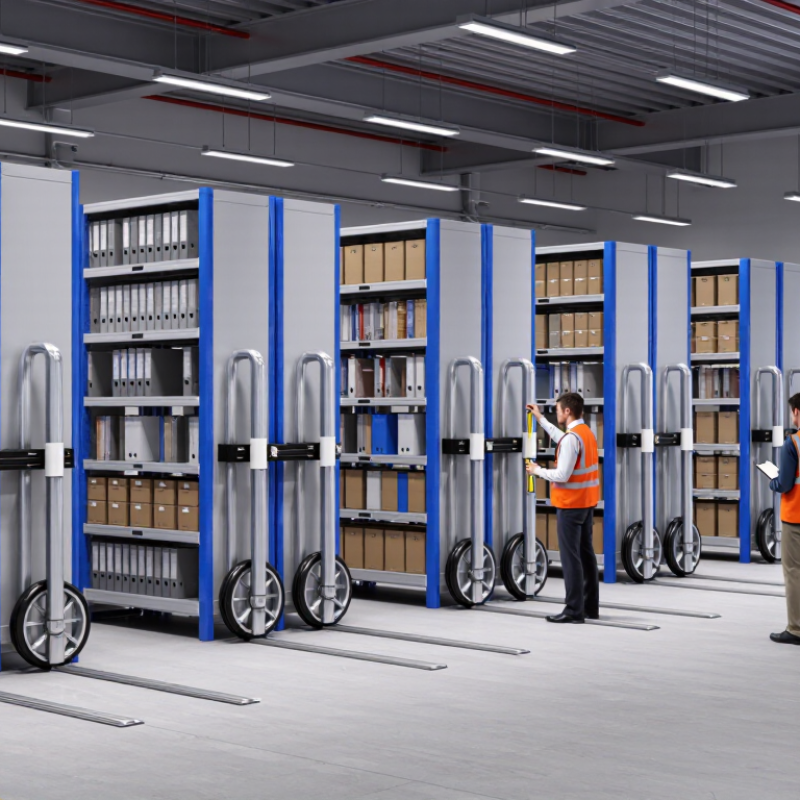
China Top 10 Compact Shelving Manufacturers?

What Compact Shelving Is and Why It Matters in China

Compact shelving uses movable carriages, sliding frames, or high-density layouts to reduce wasted aisle space. It matters in China because warehouse demand is growing, while urban land remains expensive. According to the 2024 China Logistics Development Report, China’s total social logistics value reached 360.6 trillion yuan in 2024. The report also recorded a logistics-cost-to-GDP ratio of 14.1%. These figures show why storage efficiency deserves practical attention.

In site planning, compact shelving can increase usable storage capacity without expanding the building. A movable aisle may serve several rows, rather than leaving every row permanently open. This suits spare parts, archives, medical supplies, and slow-moving inventory.

Yet density is not everything. Workers still need safe access, ventilation, fire protection, and clear load limits. A technically impressive layout can become inconvenient during peak picking periods. That part is easy to underestimate.

Tips: Measure real inventory movement before choosing a system. Record pallet sizes, carton weights, retrieval frequency, and seasonal peaks. Ask manufacturers for load tests, safety documentation, maintenance plans, and installation references. The China Federation of Logistics and Purchasing also emphasizes operational efficiency, not storage volume alone. A smaller system with reliable access may outperform a denser design. Human workflow should remain visible.

How China’s Compact Shelving Manufacturers Are Evaluated

China Top 10 Compact Shelving Manufacturers?

How China’s Compact Shelving Manufacturers Are Evaluated

Evaluating compact shelving manufacturers requires more than comparing catalog prices. Buyers should examine manufacturing experience, engineering depth, and documented project results. A reliable supplier explains how its systems handle load, movement, corrosion, and daily warehouse pressure. Product drawings should show rail dimensions, shelf spacing, locking features, and installation tolerances. Vague specifications deserve closer questions.

Factory evaluation adds practical evidence. Auditors can review welding areas, powder-coating lines, material storage, and final inspection records. Sample shelves should be measured, loaded, and repeatedly operated. Watch for uneven frames, rough rollers, and doors that do not align. Small faults often reveal weak process control. Test it.

Technical credibility also depends on traceable materials and consistent quality checks. Ask for load-test reports, applicable safety documentation, and clear replacement procedures. Strong manufacturers usually provide installation guidance, maintenance schedules, and staff training. References from warehouses with similar aisle widths are especially useful. A showroom can impress, but an operating site tells more.

Cost should include freight, installation, floor preparation, and future repairs. Some suppliers offer attractive prices while using thinner steel or limited adjustment ranges. That choice may create higher maintenance costs later. Buyers should compare total ownership value, not only the first quotation. Evidence counts. Yet even a careful evaluation has limits; supplier documents may describe ideal conditions rather than real warehouse behavior. Independent inspection remains worthwhile before a large order.

China’s Top 10 Compact Shelving Manufacturers

China’s Top 10 Compact Shelving Manufacturers

China’s top 10 compact shelving manufacturers should be assessed through evidence, not advertising claims. The China Federation of Logistics and Purchasing reported that China’s social logistics value reached approximately RMB 360.6 trillion in 2024. This scale increases demand for denser, safer storage systems. MHI’s 2024 Annual Industry Report also found that 67% of supply-chain professionals planned to increase technology investment. Compact shelving now supports archives, spare parts, libraries, and controlled warehouse areas.

A credible shortlist should compare load capacity, rail precision, motor protection, emergency release, and installation records. Ask for test certificates, material specifications, and project references from similar climates. Manufacturers should explain usable floor-space gains, not only quote “up to 80%.” In practice, aisle width, pallet dimensions, fire access, and operator habits change the result. One weakness remains: public factory data is often incomplete. That makes independent audits important. Buyers should also check whether rated capacity applies to each shelf or the entire bay.

Tips: Request a sample bay before ordering ten systems. Measure noise, movement speed, stopping accuracy, and manual release effort. Review three years of spare-parts availability. Confirm compliance with applicable structural and electrical standards. A low purchase price can become expensive when rails deform or controllers fail. The best comparison uses total cost per stored cubic metre, not equipment price alone.

China Top 10 Compact Shelving Manufacturers? - China’s Top 10 Compact Shelving Manufacturers

Comparative overview of anonymized Chinese compact shelving manufacturers and their commonly published product capabilities

Rank Anonymous Manufacturer Primary Product Focus System Type Typical Load per Shelf Typical Height Range Storage Capacity Gain Drive Configuration Customization Common Application
01 Manufacturer 01 Heavy-duty mobile shelving Electric mobile rack 500–1,000 kg 2.0–3.5 m Up to 80% Motorized rail base High Warehouses and archives
02 Manufacturer 02 Industrial compact storage Manual mobile shelving 300–800 kg 1.8–3.0 m Up to 70% Handwheel or chain drive High Manufacturing facilities
03 Manufacturer 03 Archive and file shelving Electric archive system 80–300 kg 1.8–2.6 m Up to 60% Electric rail base Medium to high Libraries and records centers
04 Manufacturer 04 Pallet and carton storage Heavy-duty mobile rack 500–1,500 kg 2.5–4.5 m Up to 75% Motorized platform High Logistics and distribution
05 Manufacturer 05 Medical and laboratory storage Enclosed mobile shelving 100–400 kg 1.8–2.8 m Up to 65% Manual or electric High Hospitals and laboratories
06 Manufacturer 06 Retail and parts storage Light-duty mobile shelving 80–300 kg 1.5–2.4 m Up to 55% Manual handwheel Medium Retail backrooms and workshops
07 Manufacturer 07 Textile and garment storage Mobile garment rack 100–350 kg 1.8–3.0 m Up to 60% Manual or motorized Medium to high Garment factories and showrooms
08 Manufacturer 08 Automotive component storage Heavy-duty drawer shelving 200–800 kg 1.8–3.0 m Up to 65% Manual mobile base High Automotive plants and repair centers
09 Manufacturer 09 Document and museum storage 密封型移动架 80–250 kg 1.8–2.6 m Up to 60% Manual or electric Medium to high Museums and cultural institutions
10 Manufacturer 10 General-purpose compact storage Modular mobile shelving 100–500 kg 1.5–3.0 m Up to 60% Manual or electric Medium Offices and commercial storage
Data note: Load capacities, height ranges, and capacity gains are representative specifications commonly published for Chinese compact shelving systems. Final values depend on engineering design, floor loading, shelf dimensions, drive configuration, and project requirements.

Product Types, Technologies, and Customization Options

China’s leading compact shelving manufacturers typically offer mobile, static, and motorized systems for warehouses, archives, libraries, and workshops. Mobile units use hand wheels or electric drives to close aisles and increase usable floor space. Static shelving suits frequent access and lower budgets. Motorized designs support heavier loads, but they require careful floor assessment and electrical planning. Fit matters more.

Common technologies include modular frames, anti-tip locking, position sensors, emergency stops, and programmable aisle controls. Some systems add barcode integration or inventory software connections. These features improve control, but they also increase maintenance needs. A polished catalog is not proof of dependable production. Buyers should request load-test records, wiring diagrams, installation guidance, and replacement-part policies. Measure twice.

Customization usually covers shelf depth, bay width, upright height, load capacity, panel materials, surface coatings, and aisle spacing. Manufacturers can adapt units to uneven rooms, low ceilings, archive boxes, or long industrial components. Climate-controlled areas may need corrosion-resistant finishes. Fire access and worker movement must remain practical after installation. An attractive layout can still become inconvenient when shelves are fully loaded.

For the top ten manufacturers, compare engineering drawings rather than price alone. Check sample welds, component tolerances, packaging quality, and factory inspection procedures. Clear documentation builds trust. However, customization may extend lead times and complicate future repairs, so every special feature deserves a cost and service review.

How to Compare Suppliers, Pricing, and After-Sales Support

China Top 10 Compact Shelving Manufacturers: How to Compare Suppliers, Pricing, and After-Sales Support

A credible shortlist should begin with measurable requirements, not catalog photos. Ask each supplier for load ratings, steel thickness, carriage spacing, surface treatment, and test standards. Request a working demonstration with pallets or archive boxes similar to yours. MHI’s 2024 Annual Industry Report indicates that more than four in ten supply-chain companies already use robotics and automation. This supports checking motor controls, sensors, emergency stops, and integration options before comparing prices. Cheap equipment can become expensive when aisle capacity, installation, or electrical work is excluded.

Compare quotations line by line. Separate shelving frames, drive systems, software, delivery, installation, training, spare parts, and taxes. A supplier offering a lower factory price may provide weaker documentation or longer replacement times. Ask for a written warranty, response-time commitment, parts list, and remote troubleshooting process. The International Federation of Robotics reported over 500,000 industrial robot installations globally in 2023, showing how quickly automated equipment is becoming standard. However, compact shelving is not automatically reliable because it is automated. Check service records, inspection procedures, and references from facilities with similar humidity and load conditions. One detail is easy to miss: confirm who pays for commissioning adjustments. My own comparison would also allow a small contingency budget. Real projects rarely follow the quotation perfectly.

FAQS

What should buyers compare when selecting a compact shelving supplier?

Compare load capacity, rail precision, motor protection, emergency release, and installation records. Ask for measurable evidence. Catalog photos are not enough.

How can buyers verify the stated load capacity?

Request test certificates and material specifications. Confirm whether the rating applies to each shelf or the complete bay. This detail matters.

Should buyers request a sample system before ordering?

Yes. Test one sample bay with similar pallets or archive boxes. Measure noise, movement speed, stopping accuracy, and manual release effort.

How should buyers compare supplier quotations?

Review each quote line by line. Separate frames, drive systems, software, delivery, installation, training, spare parts, and taxes.

Why can a low purchase price become expensive?

A low price may exclude electrical work, commissioning, installation, or replacement parts. Deformed rails and failed controllers can increase long-term costs.

What after-sales commitments should buyers request?

Request a written warranty, response-time commitment, parts list, and remote troubleshooting process. Review three years of spare-parts availability.

How important are local conditions and facility references?

They are highly important. Request references from facilities with similar humidity, loads, aisle widths, and operating habits.

What practical details can change the promised space savings?

Aisle width, pallet dimensions, fire access, and operator habits affect usable space. “Up to 80%” is not a guaranteed result.

Which safety and control features deserve special attention?

Check sensors, emergency stops, motor controls, manual release, and applicable structural and electrical standards. Automation does not guarantee reliability.

How should buyers calculate the real project cost?

Compare total cost per stored cubic metre, not equipment price alone. Keep a small contingency budget because projects rarely follow quotations perfectly.

Conclusion

Compact Shelving is a space-saving storage solution designed to increase capacity by placing movable shelving units on floor tracks and reducing unnecessary aisles. In China, it is widely considered for archives, warehouses, libraries, workshops, and other facilities where organized storage and efficient use of floor area are important. This article explains the main structures, drive systems, safety features, materials, and control options that influence system performance and usability.

It also presents a practical comparison of China’s top 10 Compact Shelving manufacturers without focusing on brand promotion. The evaluation considers manufacturing experience, product quality, engineering capability, customization, production consistency, certifications, delivery reliability, and after-sales service. Readers will learn how to compare manual, mechanical, and automated solutions, assess pricing beyond the initial quotation, review installation and maintenance support, and select a supplier that matches their storage capacity, operating environment, budget, and long-term service requirements.

Isabella

Isabella

Isabella is a dedicated marketing professional with a sharp focus on driving brand growth and engagement through strategic content creation. With an extensive background in digital marketing, she combines her passion for storytelling with her keen understanding of industry trends to deliver......