Choosing a dynamic storage system is not simply a matter of buying the fastest equipment. It is an operational decision shaped by product size, order frequency, ceiling height, labor skills, and future growth. In this guide, we examine the top 10 types of Dynamic Storage systems for buyers, from vertical lift modules and horizontal carousels to shuttle systems, mobile racking, and automated storage and retrieval solutions.
The practical differences appear on the warehouse floor. A vertical lift module may bring a small tray directly to an operator, reducing walking across a 10,000-square-foot facility. A pallet shuttle may improve density, yet it can be less suitable for mixed-SKU picking. A carton flow rack may look simple, but replenishment discipline matters. As logistics technology expert Rick Blasgen has said, “Supply chains are becoming more connected, intelligent, and responsive.” That principle applies directly to storage design.
Performance must be measured carefully. Shorter travel distances, higher storage density, safer handling, and accurate inventory records are useful indicators. However, no system wins in every building. A glossy calculation can miss maintenance access, employee training, or awkward product dimensions. That is where buyers often need to pause.
This overview uses practical evaluation criteria, including capacity, throughput, scalability, integration, energy use, and total ownership cost. It also recognizes an uncomfortable truth: the most automated option is not always the most sensible one. A reliable Dynamic Storage strategy should fit real workflows, not merely impressive demonstrations. Even this guide has limits, because operating conditions change. Good decisions leave room for review, adjustment, and honest learning.
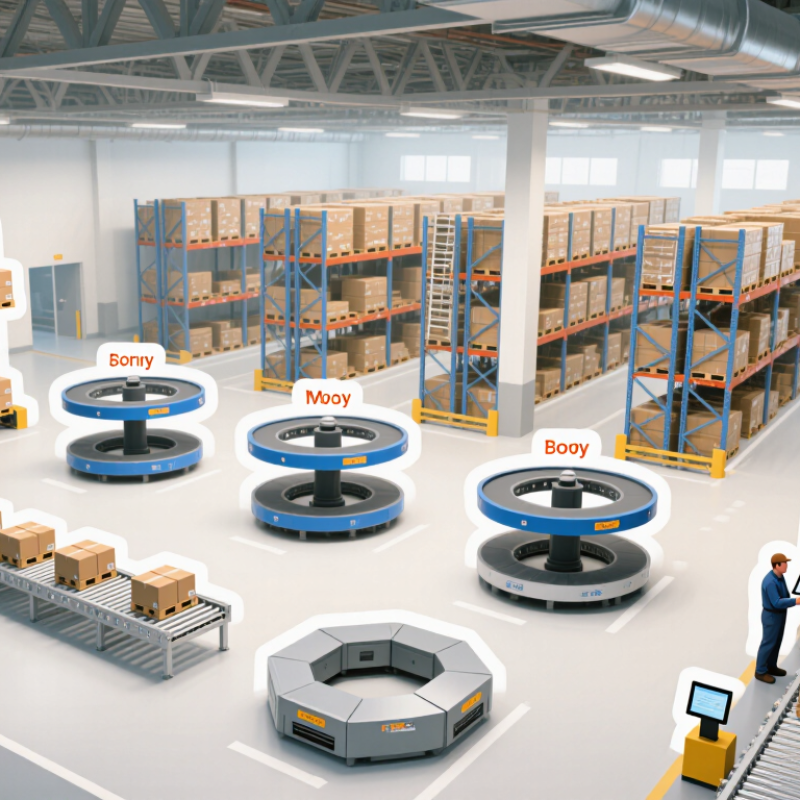
Dynamic storage systems use powered movement, software, or gravity to bring goods closer to the operator. They reduce walking, improve space usage, and support faster picking. In a working warehouse, this may mean a tote arriving at waist height instead of a worker searching several aisles.
Common types include:
A reliable system combines storage frames, carriers, motors, sensors, controls, safety barriers, and inventory software. The control system records each location and directs every movement. Sensors can detect blocked paths, open doors, or misplaced loads.
Load capacity, item size, retrieval speed, floor strength, and maintenance access all affect the design.
I have found that a fast machine is not always the best choice. Poor data or awkward packaging can still create delays.
Tips: Measure real picking patterns before selecting equipment. Test the heaviest and most fragile items. Leave clear access for maintenance. Ask for cycle-time records, safety documentation, and operator training details. A small pilot can reveal problems that drawings hide. Also, review energy use and noise levels. These details are easy to overlook, but they influence daily comfort and long-term operating costs.
Top 10 Types of Dynamic Storage Systems for Buyers
Automated storage and retrieval systems deserve close attention when high-throughput operations handle thousands of order lines. They combine software, cranes, shuttles, lifts, and storage locations into controlled material flow. In a distribution center, an operator can request a tote at a workstation, while the system retrieves it from multiple levels. This reduces walking, improves inventory visibility, and limits unnecessary handling. The result depends on disciplined data.
Dynamic options suit different loads. Vertical lift modules use enclosed trays for small components and ergonomic access. Horizontal carousels bring bins to operators while saving aisle space. Mini-load systems handle totes rapidly, while pallet cranes serve heavier unit loads. Shuttle-based designs can increase density in deep lanes. Each format has limits. Speed may fall when software rules, replenishment, or packing stations lag.
From implementation experience, throughput is not only a machine specification. Slotting accuracy, barcode quality, maintenance, and clear exception procedures matter every hour. A jammed tote can stop a carefully balanced line. It happens. Buyers should test peak order profiles, not average daily volume. Ask about recovery procedures, outage access, training plans, and measurable service targets. Energy use, floor loading, fire protection, and future expansion also require engineering review. A compact system may look ideal, yet poor integration can create new queues. I would leave some capacity unused. That choice feels inefficient, but it allows room for seasonal surges and imperfect forecasts.
Automated Storage and Retrieval Systems for High-Throughput Operations
The chart shows representative throughput ranges in storage and retrieval units per hour for common dynamic storage technologies. Actual performance depends on load size, aisle design, workstation capacity, software controls, and the number of machines operating in parallel.
Top 10 Types of Dynamic Storage Systems for Buyers
Carousel, Vertical Lift, and Vertical Buffer Storage Solutions
Dynamic storage systems move inventory to the operator, reducing walking and improving picking consistency. Horizontal carousels suit small parts, maintenance items, and order lines with steady demand. Vertical lift modules use trays and guided retrieval, saving valuable floor space while improving product protection. Vertical buffer systems add high-density storage for totes, cartons, and fast-moving goods.
According to Deloitte’s 2024 Smart Manufacturing and Operations Survey, 86% of surveyed leaders expect smart manufacturing to become a major competitiveness driver within five years. That finding supports investment in connected storage, but automation alone cannot fix poor slotting. A carousel may struggle with oversized products. A vertical lift may need careful height planning. Buffer systems can also create bottlenecks when replenishment rules are weak. Real experience matters here.
Tips: Measure item dimensions, order frequency, operator travel, and peak-hour demand before choosing equipment. Ask suppliers for tested throughput data, not only theoretical capacity. The 2024 MHI Annual Industry Report identifies robotics and automation as major supply-chain investment priorities. Still, buyers should compare recovery procedures, maintenance access, safety controls, and integration costs. Start with a small pilot. Then challenge the assumptions.
| Rank | Storage System Type | Typical Stored Load | Typical Capacity Range | Typical Throughput | Space-Saving Potential | Automation Level | Best-Fit Applications | Key Buying Considerations | Common Limitations |
|---|---|---|---|---|---|---|---|---|---|
| 1 | Horizontal Carousel | Small cartons, totes, bins, and individual items | 10–100 kg per carrier | 100–400 picks/hour per operator | Often reduces floor space by approximately 30–60% compared with static shelving | Semi-automated | Order picking, parts storage, apparel, maintenance inventory, and kitting | Carrier size, workstation ergonomics, number of carousels, and software integration | Requires a relatively wide floor area and may be less suitable for very tall storage rooms |
| 2 | Vertical Carousel | Small and medium-sized parts, tools, documents, and packaged goods | 10–250 kg per shelf | 60–200 picks/hour per operator | Can use ceiling height and typically cuts floor footprint by approximately 50–70% | Semi-automated | Tool rooms, spare parts, healthcare supplies, electronics, and secure inventory | Building height, shelf pitch, load distribution, access openings, and fire protection | Access speed can decrease when items are stored on widely separated shelves |
| 3 | Vertical Lift Module (VLM) | Trays containing parts, cartons, bins, and long or irregular items | 100–1,000 kg per tray | 80–250 picks/hour per operator | Can reduce floor space by approximately 60–90% by using vertical height | Automated presentation | High-value parts, industrial components, medical inventory, and controlled-access storage | Tray dimensions, maximum building height, load-per-tray requirements, and inventory software | Higher purchase cost and slower return on investment for low-volume operations |
| 4 | Vertical Buffer Storage System | Small totes, bins, parcels, and fast-moving individual items | 20–50 kg per tote | 200–600 totes/hour, system dependent | Typically uses 10–20 m of vertical space and minimizes walking requirements | Highly automated | E-commerce fulfillment, spare parts, micro-fulfillment, and high-SKU operations | Tote dimensions, peak order profile, software controls, replenishment strategy, and redundancy | Performance depends heavily on software, order sequencing, and consistent tote standards |
| 5 | Mini-Load AS/RS | Standard totes, cartons, trays, and small containers | 20–150 kg per load | 100–400 storage or retrieval cycles/hour | High-density storage in aisles generally 8–20 m high | Highly automated | Distribution centers, manufacturing components, order consolidation, and goods-to-person picking | Container standardization, crane or shuttle configuration, controls integration, and service access | Requires substantial engineering and may be less flexible when product dimensions change frequently |
| 6 | Unit-Load AS/RS | Full pallets, large cartons, and heavy production loads | 500–2,000 kg per load | 30–120 pallet movements/hour per aisle | High-bay designs can use 20–40 m of vertical height | Highly automated | Finished goods, raw materials, cold storage, and high-volume pallet distribution | Load stability, rack seismic design, fire codes, aisle configuration, and peak throughput | High capital investment and limited practicality for low-volume or frequently changing operations |
| 7 | Shuttle-Based AS/RS | Totes, cartons, trays, and pallets depending on shuttle design | 50–1,500 kg per load | 100–600 movements/hour per zone or system | Dense storage with reduced fixed-aisle requirements | Highly automated | High-throughput distribution, buffering, pallet storage, and temperature-controlled facilities | Shuttle count, battery charging, lift capacity, lane depth, and system redundancy | More moving equipment increases maintenance, controls, and operational complexity |
| 8 | Pallet Flow Rack | Standard pallets and high-volume case inventory | 500–1,500 kg per pallet | Continuous flow; manual or assisted picking | Can provide approximately 30–50% more pallet density than conventional selective rack | Gravity-assisted | First-in, first-out inventory, food and beverage, distribution, and date-sensitive products | Roller selection, pallet quality, lane depth, load orientation, and replenishment method | Higher rack cost and possible product damage if pallets or rollers are poorly matched |
| 9 | Push-Back Rack | Standard pallets and similar products stored by SKU | 500–1,500 kg per pallet | Manual or forklift-assisted; typically 20–60 pallet movements/hour per zone | Can increase pallet positions by approximately 30–60% compared with single-deep selective rack | Mechanically assisted | Last-in, first-out storage, seasonal goods, batch inventory, and medium-turn products | Forklift compatibility, lane depth, product uniformity, rack protection, and access frequency | Less suitable for strict first-in, first-out rotation and mixed-SKU lanes |
| 10 | Mobile Rack Storage | Documents, cartons, bins, pallets, and archive materials | 100–1,500 kg per shelf, beam, or pallet position | Access speed varies; generally 20–80 retrievals/hour per aisle | Can reduce the number of required access aisles and save approximately 40–70% of floor area | Powered or manual | Archives, compact warehouses, cold rooms, spare parts, and low-to-medium access inventories | Floor loading, rail installation, aisle safety, emergency access, and retrieval frequency | Only one or a limited number of aisles may be available at a time, reducing simultaneous access |
Dynamic storage systems help buyers use warehouse space without freezing daily operations. Mobile racking moves storage aisles, creating access only where needed. It suits facilities with high-density pallets and limited floor area. However, heavy loads require accurate rail alignment, floor checks, and disciplined operating procedures. A small installation error can become an expensive interruption.
Shuttle systems use powered carriers to move pallets through deep lanes. They reduce forklift travel and support high-volume, repetitive storage. Robotic storage technologies go further by combining software, sensors, lifts, and automated vehicles. They can retrieve small items quickly, even under dim lighting. Yet automation is not automatically better. Poor data, unstable packaging, or weak maintenance planning can reduce performance. Buyers should compare real order profiles, peak demand, pallet dimensions, retrieval frequency, and available technical support. A practical site test often reveals problems that a sales diagram hides.
Tips: Measure actual workflows for several weeks. Ask for recovery procedures during power or software failures. Check emergency access, operator training, spare parts, and inspection records. Leave room for future growth, but avoid buying capacity that may remain unused. No layout is perfect. Recheck assumptions before signing.
Top 10 Types of Dynamic Storage Systems for Buyers
Dynamic storage includes pallet flow racks, carton flow racks, mobile shelving, vertical carousels, lift modules, and automated retrieval systems. Each type serves a different operating pattern. Capacity should be measured in usable locations, not just floor area. Check load ratings, aisle width, item dimensions, and future inventory growth. A low purchase price can hide installation, maintenance, software, and energy costs.
Safety requires more than guards and warning labels. Ask for documented testing, emergency access, operator training, and inspection procedures. Moving shelves and automated lifts need clear access controls. Scalability also matters. Can the system add modules without stopping daily work? Can it handle heavier loads later? A site survey by an experienced integrator often reveals risks that drawings miss.
Tips: Compare total ownership cost over five years. Test real products, including awkward cartons. Measure retrieval time during peak demand. Leave expansion space. Do not trust capacity claims without written assumptions.
In practice, buyers should score every option against the same criteria. A mobile system may increase density, yet slow access during frequent picking. A vertical lift can protect inventory from dust, but it may need dependable power and regular service. Automated storage can improve accuracy, though poor data creates expensive delays. These trade-offs are easy to underestimate. I would also challenge one common assumption: maximum density is not always the best result. Staff movement, fire protection, noise, and repair access can change the final decision.
They retrieve totes, cartons, or pallets from storage locations. Operators request items at workstations. The system reduces walking and unnecessary handling. Results depend heavily on accurate data.
Vertical lift modules and vertical carousels suit small items. Enclosed trays can reduce dust exposure. Operators receive materials at an ergonomic access point. Small errors still cause delays.
Shuttle systems suit repetitive, high-volume pallet storage. Powered carriers move pallets through deep lanes. They reduce forklift travel and improve storage density. Access may slow when retrieval patterns change.
Measure usable storage locations, not only floor area. Check pallet dimensions, carton sizes, load ratings, and aisle widths. Test awkward cartons and peak order profiles. Average volume can hide serious bottlenecks.
Compare purchase, installation, software, maintenance, energy, and training costs. Use a five-year ownership view. A low initial price may create expensive service needs. The cheapest option is not always cheaper.
Review emergency access, floor loading, fire protection, guards, and inspection records. Confirm operator training and clear access controls. Moving shelves need careful rail alignment. One small installation error can interrupt operations.
Measure real workflows for several weeks. Test retrieval times during peak demand. Include unstable packaging, unusual cartons, and replenishment tasks. A site test may expose problems hidden by neat drawings.
Leave space for seasonal surges and uncertain forecasts. Add modules without stopping daily operations, if possible. Unused capacity feels wasteful. Still, I would avoid planning too tightly.
Dynamic Storage systems are designed to improve how goods are organized, accessed, and managed in modern warehouses. By using space more efficiently and reducing unnecessary movement, they support faster order fulfillment, better inventory visibility, and safer workplace operations. Core components may include storage frames, conveyors, control software, sensors, and automated handling equipment. Automated Storage and Retrieval Systems are particularly useful for high-throughput environments, while carousel systems, vertical lift modules, and vertical buffer solutions help maximize vertical space and provide organized access to stored items.
The article also examines mobile racking, shuttle systems, and robotic storage technologies, each offering different benefits for capacity, speed, and flexibility. When evaluating a Dynamic Storage solution, buyers should consider available space, storage density, throughput requirements, installation and operating costs, safety features, maintenance needs, and future scalability. Selecting the right system requires balancing current operational demands with long-term growth, ensuring that the solution remains efficient, adaptable, and practical as inventory volumes and workflows change.

Fangding Rack